
Why Anderson Valley Is California’s Cool-Climate Pinot Noir Sweet Spot
If you are searching for the next bottle of cool climate Pinot Noir to fall in love with, Anderson Valley Pinot Noir should be high on your list.
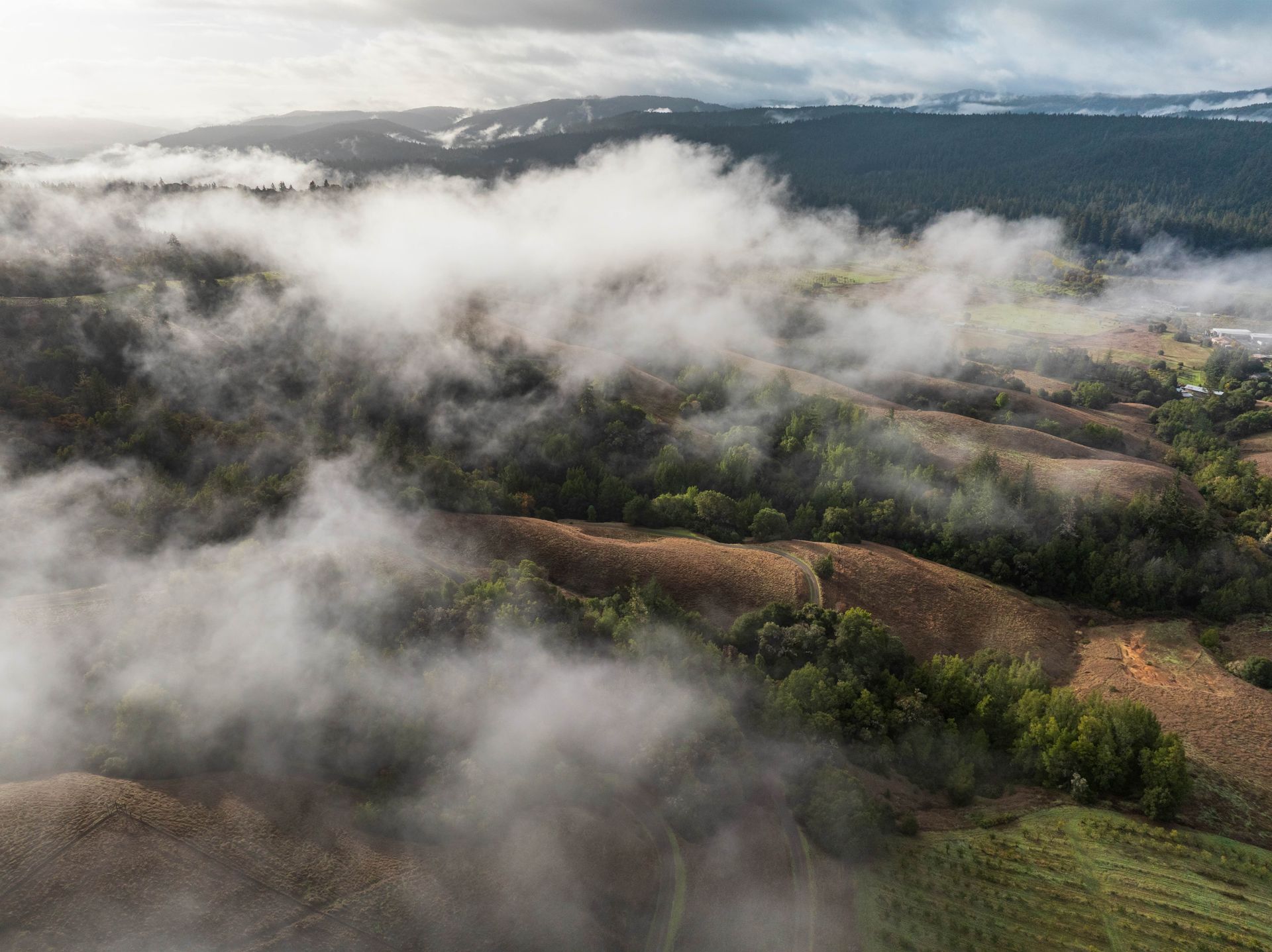
Our little stretch of Mendocino County sits far enough off the beaten path that you have to really mean it to get here.
Once you do, it is obvious why so many winemakers quietly prize the Anderson Valley wine region for Pinot Noir: cool ocean air, long light-filled days, big temperature swings, and a landscape that feels more redwoods and river bends than postcard-perfect Napa.
At Brashley, this is home. We farm, make wine, and pour here every day, so when we talk about Mendocino Pinot Noir, we are really talking about this cool, fog-fed valley we wake up to each morning.
Where Anderson Valley Actually Is
Anderson Valley sits in western Mendocino County, about 100 miles north of San Francisco and 10–15 miles inland from the Pacific. Highway 128 winds you in from either direction: redwoods and ocean if you are coming from the coast, oak-dotted hills if you are driving up from Sonoma.
The valley itself is small and skinny, roughly 15–16 miles long and about a mile wide, carved by the Navarro River as it works its way out to the ocean. That river is like a highway for fog. Cool, salty air forms over the Pacific, then rides the Navarro inland, spilling into the Anderson Valley wine region most nights and mornings before slowly burning off in the afternoon.
The result is one of the most distinct cool-climate pockets in California. Summers are sunny but not scorching. Nights are genuinely cold. Vines stay active for a long time, building flavor at their own pace instead of racing toward ripeness.
What “Cool Climate Pinot Noir” Means In The Glass
Cool climate Pinot Noir is a phrase that gets thrown around a lot, but in Anderson Valley we see what it means vintage after vintage. A cool region like this tends to offer three things Pinot loves:
Moderate daytime highs, not heat waves
Very cool nights
A long, slow growing season
Those big day–night temperature swings are a hallmark of Anderson Valley. Warm afternoons help grapes ripen; cold nights lock in acidity and slow everything down. That rhythm gives Pinot time to build layered flavor without losing freshness.
In the glass, Anderson Valley Pinot Noir usually comes across as more lifted and aromatic than Pinot from warmer inland areas. Instead of dense, ripe black fruit, you will often find:
- Red cherry, cranberry, pomegranate, sometimes a bit of blue fruit
- Floral tones like rose or violet
- Savory notes that hint at tea, forest floor, spice, or mushroom
- Bright, persistent acidity with medium body and fine, silky tannins
Alcohol levels tend to be modest for California, which keeps the wines feeling energetic rather than heavy. For people who love nuance and texture in Pinot Noir, that combination is a sweet spot.
Why Pinot Noir Took Over Anderson Valley
Mendocino County as a whole grows a wide range of grapes, from Zinfandel and Cabernet Sauvignon in the warmer inland valleys to aromatic whites and Pinot on the coast. Anderson Valley is the cool-climate piece of that puzzle.
Over time, growers here have steadily planted more Pinot Noir as they realized how naturally it fits the site. Today, Pinot Noir is the dominant grape in Anderson Valley, making up the majority of vineyard acreage, with Chardonnay in a solid supporting role. A small amount of aromatic white varieties and a bit of Italian and Alsatian heritage remain, but Pinot is the clear focus.
That focus shows up in the styles of wine the valley is known for:
- Still Anderson Valley Pinot Noir, often from single vineyards or carefully chosen estate sites
- Traditional-method sparkling wines based on Pinot Noir and Chardonnay
- Rosé and white Pinot Noir expressions that lean into the region’s high-acid profile
If you see “Mendocino Pinot Noir” on a label and then spot “Anderson Valley” listed as the AVA or vineyard source, you are looking at fruit from one of California’s coolest, most coastal-influenced zones.
Anderson Valley’s Coolest Corner
Even within Anderson Valley, some areas are cooler than others. The stretch of the valley that angles toward the ocean near the town of Navarro is known locally as the Deep End. Vineyards in the Deep End sit closer to the Pacific and under heavier fog influence, which makes this part of the valley even cooler than sites nearer to Boonville.
Pinot Noir from the Deep End often shows extra tension and edge: more mineral, a touch more herbal or spicy, and often incredibly aromatic. When you hear people talk about Anderson Valley Pinot Noir tasting “coastal” or “nervy,” this is usually the part of the valley they have in mind.
How Anderson Valley Fits Into Mendocino Pinot Noir
Mendocino is large and varied. Inland regions like Ukiah and Redwood Valley are warmer and better suited to bolder reds and Mediterranean varieties. Out toward the ocean, Anderson Valley, Mendocino Ridge, and parts of Yorkville Highlands feel like a different world: cooler, foggier, and decidedly more focused on Pinot Noir and Chardonnay.
So not all Mendocino Pinot Noir is created equal. Bottlings that rely on Anderson Valley fruit tend to sit firmly in the cool-climate Pinot noir camp: bright acid, red and blue fruit, earth and floral notes, linear structure. Wines from warmer Mendocino pockets lean darker and riper, with plusher texture and more immediate fruit.
Learning to look for “Anderson Valley” on the label is an easy way to find the cool-climate style within the broader world of Mendocino Pinot Noir.
Serious Producers Came Here Early
One of the early votes of confidence for Anderson Valley as a cool-climate Pinot Noir source came from Champagne. When Louis Roederer went looking for a California home in the 1980s, they chose Mendocino over some much more famous regions and planted Roederer Estate in Anderson Valley. They were chasing exactly what Pinot Noir and Chardonnay need for balanced, long-lived wines: cool temperatures, fog, and naturally high acidity.
Since then, a long list of respected California Pinot Noir producers have either planted vineyards here or sourced fruit from Anderson Valley for single-vineyard and appellation-level bottlings. When you see big names and tiny, cult labels both quietly pulling from the same valley, it tells you the terroir is doing something special.
What Makes Anderson Valley A “Sweet Spot” For Pinot Lovers
For us at Brashley, the magic of Anderson Valley Pinot Noir is that it gives you both contrast and coherence. You can taste distinct differences between sites and producers, but there is a shared thread of freshness, perfume, and restraint that ties the wines together.
A few things make this valley a sweet spot for cool climate Pinot Noir:
- A narrow, fog-fed valley that funnels Pacific air deep inland instead of just brushing the coast
- Big diurnal swings that help grapes ripen slowly and hang onto acidity
- Vineyard plantings that are heavily weighted toward Pinot Noir and Chardonnay
- A track record of careful farming and winemaking from both multigenerational families and newer, first-generation wineries
From Brashley’s perspective, Anderson Valley gives us the kind of raw material that makes restrained, site-driven winemaking possible. We farm organically, work gently in the cellar, and try to get out of the way so the place can show through. In a warmer region, holding onto that balance would be harder. Here, the valley tends to meet us halfway.
When You Visit Or Shop
If you are planning a trip to Mendocino wine country, building your route around the Anderson Valley wine region is one of the best ways to explore cool climate Pinot Noir in depth. You can taste through different expressions of Anderson Valley Pinot Noir in a single day: Deep End vineyards versus Philo, inland sites versus windier ridges, lighter styles versus more structured bottlings.
If you are shopping from home, seek out “Anderson Valley Pinot Noir” on the label or dig into the fine print on Mendocino Pinot Noir bottles to see where the fruit comes from. When you spot Anderson Valley, you can expect a style that leans toward energy, aromatics, and grace.
And if you find yourself driving along Highway 128, we are always happy to pour you a glass at Brashley and talk about why we chose this valley as our home base for cool climate Pinot Noir.